
Our approach: Improving bone material properties to enhance bone strength
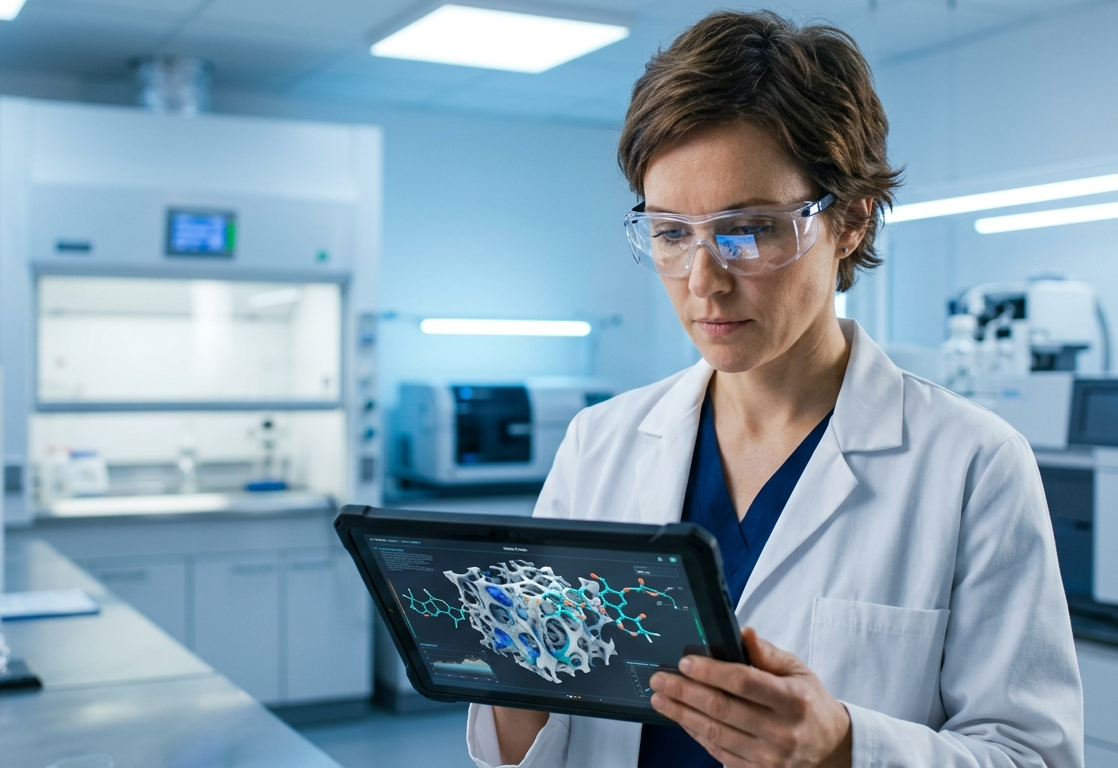
Bone quality beyond density
Conventional measures of bone health, such as dual-energy X-ray absorptiometry (DXA), capture bone mineral density - but density alone does not determine fracture resistance. The mechanical integrity of bone depends equally on the quality of the organic matrix, which is composed predominantly of type I collagen fibrils organized in a highly ordered hierarchical structure. In OI, this structure is fundamentally disrupted.
The role of enzymatic collagen cross-linking
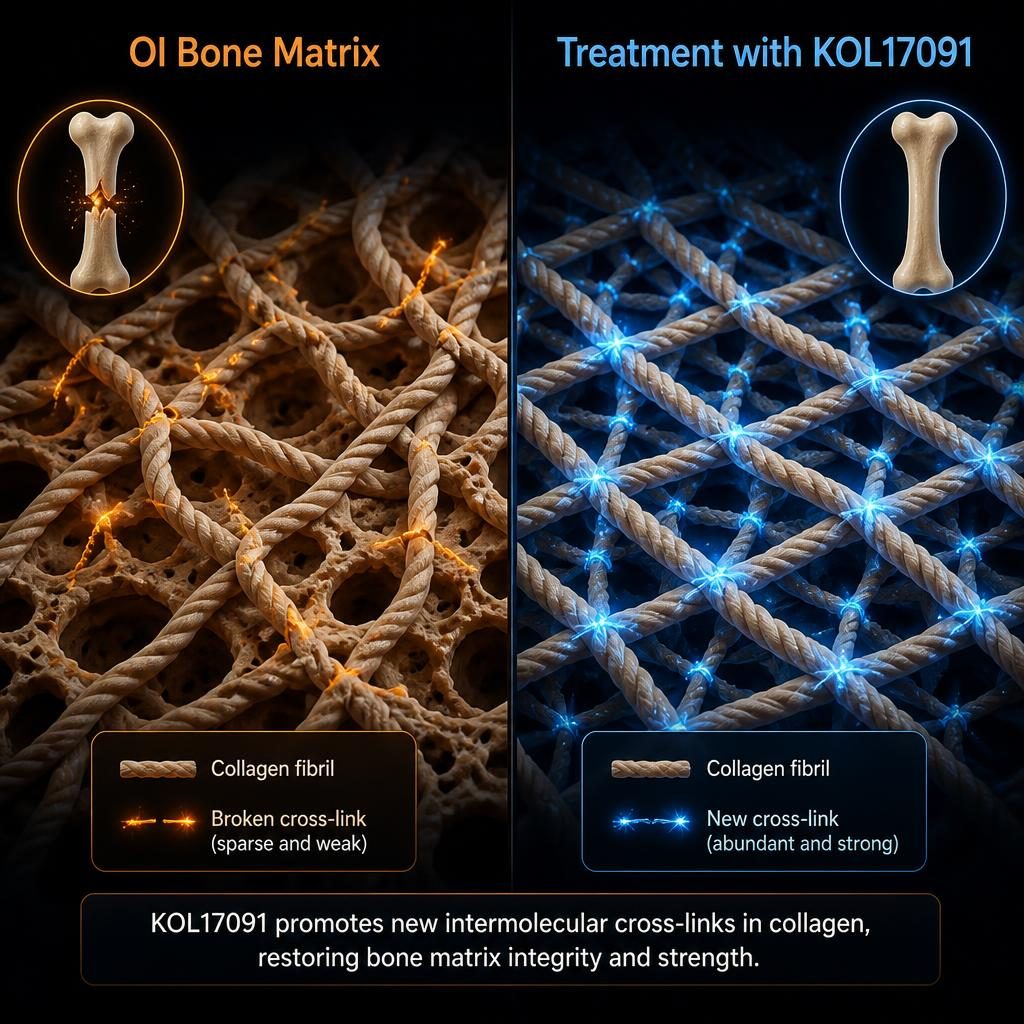
Collagen cross-linking is a post-translational process essential for the mechanical competence of the bone matrix. Enzymatic cross-links — catalyzed primarily by lysyl oxidase (LOX) and lysyl hydroxylase enzymes — form stable intermolecular bonds between collagen fibrils, conferring tensile strength and toughness to the matrix. In OI, the abnormal collagen produced by mutant fibers is associated with altered cross-link profiles, reduced matrix organization, and increased skeletal fragility independent of mineral content.
Our mechanism of actions
KOL17091 is a first-in-class dual GIP/GLP-2 analogue designed to enhance enzymatic collagen cross-linking in bone. By upregulating or potentiating the enzymatic cross-linking pathway, our compound aims to:
- Increase fibrillar cohesion within the collagen matrix
- Improve the post-yield toughness and crack resistance of bone
- Reduce microscopic damage accumulation under physiological loading
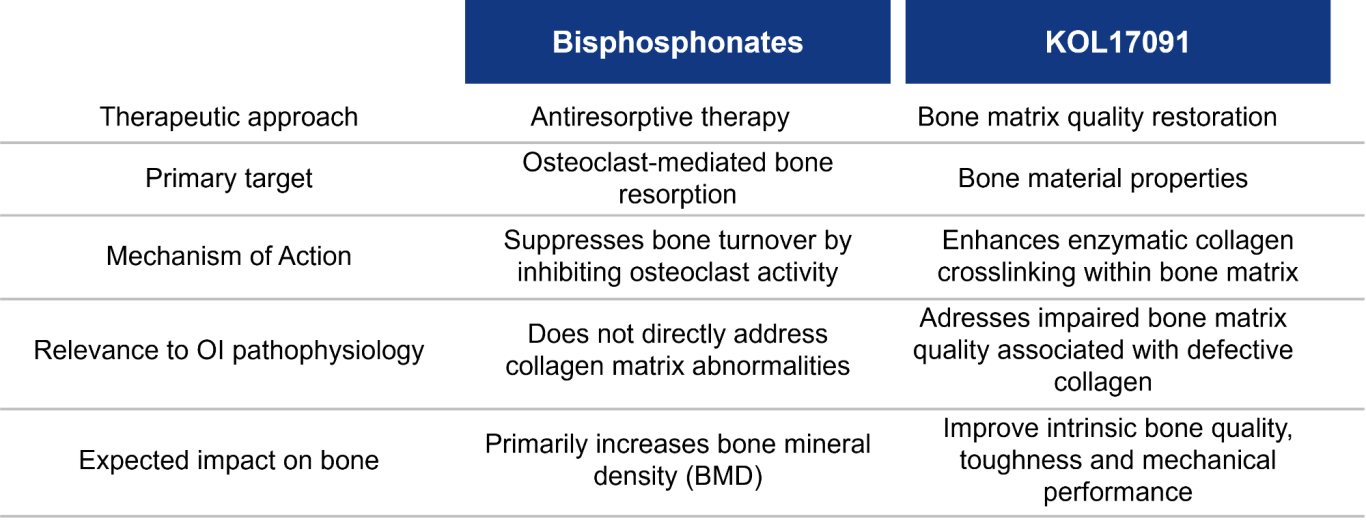
This approach is mechanistically distinct from antiresorptive therapies and represents a direct intervention on the molecular defect underlying OI-related fragility.
Differentiation from bisphosphonates
Preclinical evidences
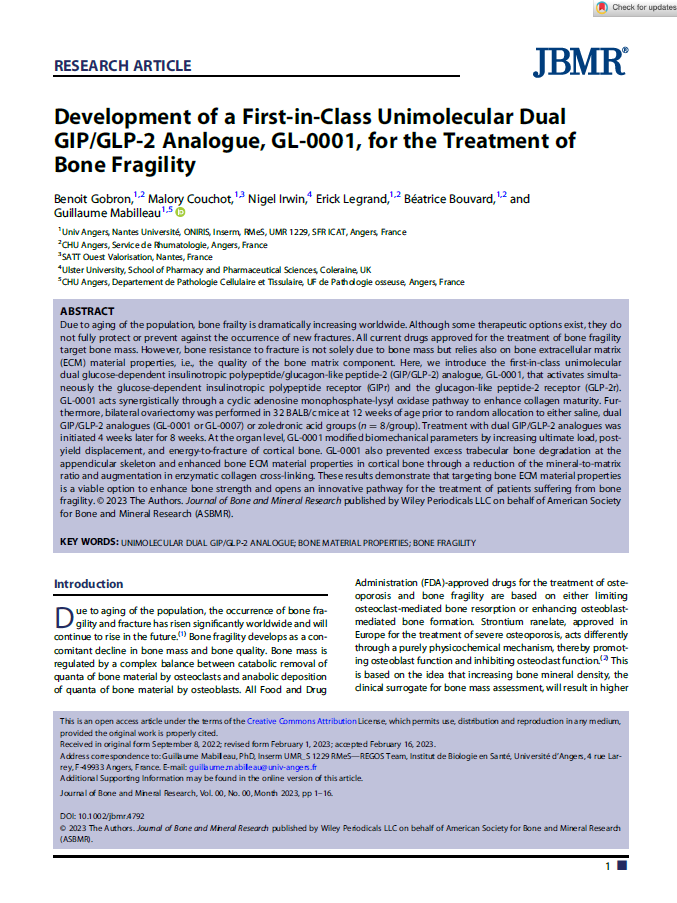
The biological rationale for enhancing enzymatic collagen cross-linking as a strategy to improve bone material quality is supported by published preclinical data. In an ovariectomy-induced bone fragility model in mice, a well-established in vivo system for studying impaired bone matrix quality and reduced skeletal toughness, treatment with KOL17091 demonstrated:
- Significant improvements in collagen cross-linking and collagen maturity, as measured by high-resolution mid-infrared imaging
- Enhanced bone toughness and post-yield deformation assessed by three-point bending assay
- Reduced bone fragility compared to vehicle-treated controls
Similar results were evidenced in an established model of type III OI, supporting translational efficacy, with a 92% reduction in the occurrence of new fractures.